
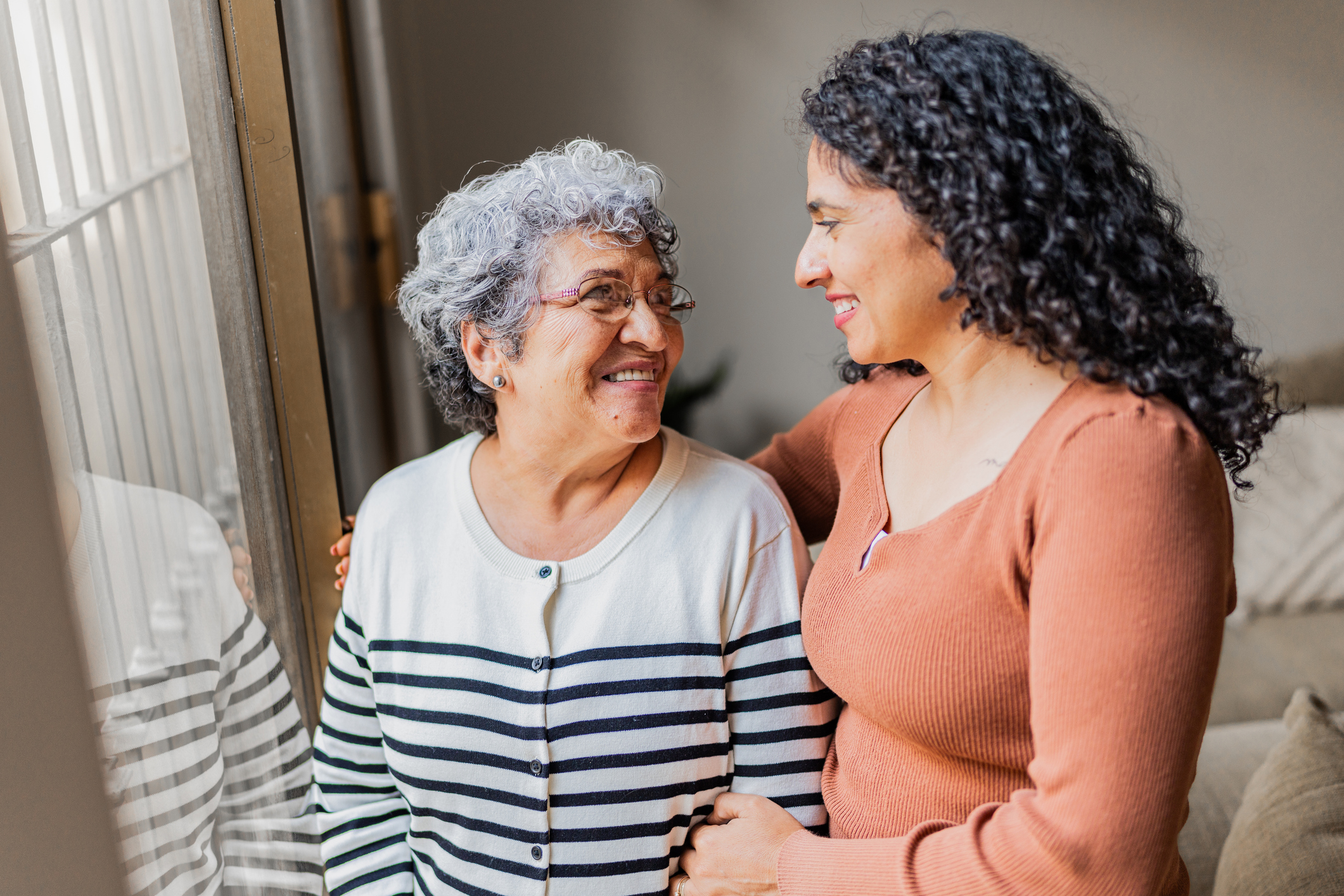
Caring for a loved one with dementia or Alzheimer’s is both an act of devotion and an emotional marathon. Families often describe the experience as living in two realities at once: supporting the person they love today while grieving the changes that unfold over time.
Dr. Karem Cando, Ph.D., National Director of Psychology at Curana Health, reminds us that these feelings are not only common, they’re human.
“When loved ones and caregivers of individuals living with Alzheimer’s or dementia understand what they’re experiencing, they’re better able to navigate the journey with clarity, compassion, and connection,” Dr. Cando says.
Navigating the confusing and often heavy experience of loving and/or caring for someone with Alzheimer’s or dementia can be challenging. This guide provides family members with tools and perspective to manage the uncertainties of Alzheimer’s and dementia with greater confidence and support.
An Alzheimer’s or dementia diagnosis often brings a wave of emotions for both the person who was diagnosed and their loved ones.
For the person diagnosed, reactions may include:
For family members, emotions might involve:
Naming these emotions help caregivers understand that what they’re feeling is normal, not a personal failing.
When you have a loved one with Alzheimer’s or dementia, grief often emerges long before the person is gone. It begins early, often quietly.
“Unlike grief that occurs after a death, anticipatory grief develops gradually as families begin to anticipate an impending loss,” Dr. Cando says. “It’s draining because you’re living in the present with all of your emotions, but in a way, your mind is focused on the future. And when it’s focusing on the future, it tends to be more anxiety related. Loved ones tend to picture that end stage of dementia or Alzheimer’s, and that’s what they are fearing the most. Every time that they see a cognitive decline in their loved one, it’s almost validating where this disease is going, feeding that anxiety and fear constantly.”
For many caregivers, feelings of grief can emerge alongside a sense of ambiguous loss.
“Ambiguous loss can feel confusing because moments of loss and moments of joy often coexist side by side,” Dr. Cando says. “It is a living dichotomy in which a person realizes that their loved one is not the same person but at the same time, they are.”
Recognizing and putting a name to these forms of grief is important and powerful. It can help caregivers understand that what they are experiencing is normal. They’re not alone.
Many people mentally leap years ahead after a diagnosis, imagining worst‑case scenarios. This can intensify fear and anxiety. Instead, Dr. Cando encourages caregivers to focus on the next step, not the entire journey.
“Start by learning about your loved one’s diagnosis, identifying available resources and establishing a healthcare team you trust,” Dr. Cando says. “The goal is not to ignore the future, but to avoid becoming so focused on what might happen that you miss the opportunities and connections available today.”
To help you stay present without ignoring the future:
“When you have those moments of connection, really let them sink in,” Dr. Cando says.
There are some topics that can be difficult to talk about while you’re still processing the reality of your loved one’s diagnosis, like end-of-life care. Having these discussions early can reduce stress later and help preserve your loved one’s voice in future decisions.
These topics can be helpful to discuss early:
“Approach these conversations with compassion, respect, and curiosity, rather than urgency or fear,” Dr. Cando says. “While these discussions may feel difficult, having them sooner allows your loved one with dementia or Alzheimer’s to actively participate in decision-making.”
Caring for someone with dementia is an act of deep love, but it can also take a toll.
“Many caregivers become so focused on caring for their loved one that they ignore their own emotional and physical needs until burnout sets in,” Dr. Cando says. “For some caregivers, stepping out and doing something for themselves can feel selfish. But it’s so important to take a moment in the day to engage in relaxation or do things that fill your cup again. Don’t let that cup get empty.”
Stress, grief, and anxiety become concerning when they start to interfere with your daily functioning, relationships, or well‑being.
“Professional support can make a meaningful difference. Seeking support is a sign of strength, not failure,” Dr. Cando says.
Some healthy strategies for coping include:
“Curana Health’s behavioral health clinicians and services can support both patients and caregivers with coping skills, resilience‑building, and emotional guidance throughout the dementia journey, ensuring caregivers feel supported, not alone,” Dr. Cando says.
Meaningful connection doesn’t depend on perfect memory. While people living with dementia may not remember every detail of an interaction, they can often remember how those interactions felt.
“Families who maintain strong connections often focus less on memory and more on relationships,” Dr. Cando says. “They concentrate on the present moment and soak in positive experiences.”
Ways to stay connected:
“Even though your loved one may be changing, you can still maintain that connection with them,” Dr. Cando says. “Rather than having expectations of how they were functioning before, meet your loved one where they are at. Are there any activities you can engage in together? It could be a different interest from what they had before their diagnosis. This could be as simple as just sitting on the couch watching TV, and soaking in that small act or moment where things feel ‘normal.’”
Legacy is more than memory. It’s values, traditions, wisdom, and relationships. Even as dementia progresses, you can continue honoring and preserving those aspects of your loved one’s life and memory by:
You are navigating one of the most complex and emotional journeys a person can face. Despite the uncertainty and difficult decisions, the moments of connection, no matter how small, are deeply meaningful. With support and a better understanding of what to expect, you can approach each stage with greater confidence and resilienc
